Endof Life: Podcast & Summary

Summary: How Are You Healing Podcast — Conversation with Catherine Shovlin on Death, Dying, and Sacred Presence

In this episode of the How Are You Healing podcast, host Elise Webster speaks with Catherine Shovlin, a death doula, spiritual practitioner, and former corporate consultant, about death, dying, grief, and the deeper spiritual dimensions of end-of-life care. The conversation challenges Western cultural taboos around death and reframes dying not as a medical failure but as a meaningful, relational, and often sacred process.

Catherine begins by explaining what a death doula is. Unlike medical professionals, a death doula offers non-clinical emotional, spiritual, and practical support to people who are dying and their families. Her role is not to impose beliefs or agendas, but to accompany someone through the final stage of life with compassion and presence. She emphasizes that the dying person is “the star of the show”—their wishes and needs take precedence, even when family dynamics become complicated. End-of-life often brings unresolved emotional issues, family tensions, and long-buried secrets to the surface, and part of her work is holding space for those realities without judgment.

Catherine describes how death is not simply the end of a physical body for many people, but a transition into another state of being. However, as a doula she remains neutral, supporting clients regardless of their beliefs about the afterlife. She outlines some common physical signs of natural dying—loss of appetite, cold extremities, agitation, or a final burst of energy—but stresses that every death is unique because it reflects the life that preceded it. Beyond the physical, dying is deeply emotional, psychological, social, and spiritual.

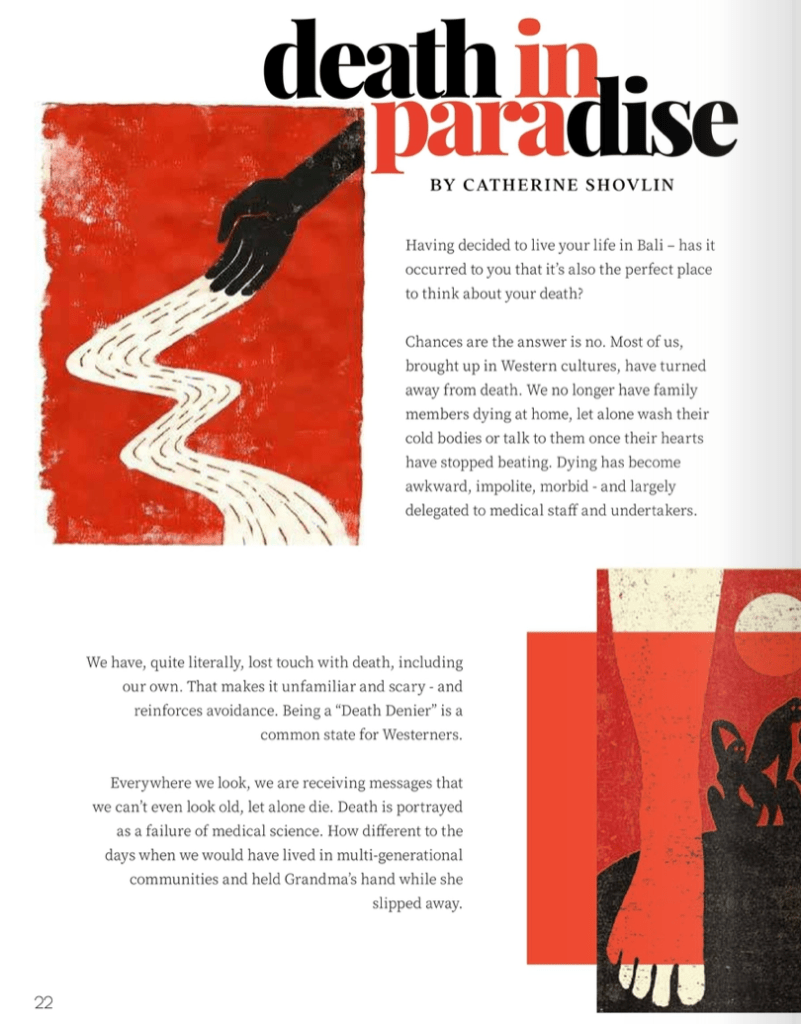
A major theme of the conversation is Catherine’s idea of “reclaiming death.” She explains that Western societies have largely outsourced dying to hospitals, legal systems, and institutions, which has distanced people from the reality of death and stripped it of intimacy and meaning. This separation has increased fear and discomfort. In contrast, many indigenous cultures and earlier European traditions kept death in the home, where children and families witnessed it as a natural part of life. Catherine believes that bringing death back into everyday awareness helps people live more consciously and fully.

One of the most powerful parts of the discussion centers on Catherine’s personal transformation. After spending decades in the oil and gas industry, she felt called into end-of-life and spiritual work. During her training, she was asked to design her “perfect death,” describing the environment, atmosphere, and emotional tone she would want at the end of her life. The exercise made her realize that she was waiting until death to allow herself peace and beauty—so she began reshaping her life to reflect those values now. For her, changing how we relate to death changes how we relate to living.

The conversation then moves into Catherine’s spiritual work, including what she calls “psychopomp” practices—helping lost or confused spirits move on. She describes entering a light trance state, receiving visual information, and working compassionately with energies that may be attached to people or places. While this aspect of her work is outside mainstream clinical frameworks, Catherine frames it as an extension of her broader commitment to healing, integration, and compassionate presence.

Another key topic is generational trauma. Catherine shares examples of how unresolved pain can be passed down through families and manifest in later generations as emotional or physical issues. Healing, in her view, is not just individual—it is ancestral and collective. Younger generations, she believes, are carrying and processing large amounts of inherited emotional material.

The discussion also addresses euthanasia. Catherine supports the idea that people should have agency over how and when they die, while also emphasizing that any such decisions must be rooted in compassion and personal autonomy, not convenience or pressure from others. She acknowledges the complexity of this issue, especially when weighed against spiritual beliefs about life lessons, reincarnation, and the soul’s journey. Ultimately, she returns to her core principle: compassionate presence, even when someone’s choices differ from our own.

Grief is another major focus. Catherine explains that grief is not just about the moment of death, but about living without someone who was part of your future. It affects identity, routines, finances, and emotional security. There is no “right” way to grieve and no timeline for healing. One of the most important things people can offer the grieving is not advice or platitudes, but simple, steady presence. Sitting in silence, listening, and offering practical support—like helping with daily tasks—can be far more meaningful than trying to say the “perfect” thing.

She also highlights how uncomfortable people often feel around grief because it confronts them with their own mortality. As a result, friends may withdraw or avoid someone who is grieving, not out of cruelty but fear. Catherine encourages normalizing grief as a shared human experience rather than something to be rushed through or hidden.

The episode concludes with Catherine discussing her “Sacred Death” course, which is designed not only for people who are grieving but for anyone who feels uneasy about death. The course helps participants explore their beliefs, fears, and expectations about dying so they can live more intentionally. The underlying philosophy is summed up in the name of the organization she trained with: Living Well, Dying Well.

Throughout the conversation, Catherine returns to one central idea: death is not separate from life. How we face death reflects how we live, how we love, and how we relate to one another. By bringing death out of the shadows and into honest, compassionate dialogue, we not only reduce fear—we deepen our humanity.

Rediscovering Life: A Journey Through Grief and Renewal

Out with the old, in with the new.

Easier said than done when you’re dealing with death or grief. Though we are all working towards integrating the things that happen to us on our journey. Acknowledging grief, feeling it, honouring it. But not being crippled by it. Finding a way to live alongside it.

As the year turns, I have a sense of fresh starts. Like that feeling I used to get whenever I got a new exercise book at school. This time will be different. This exercise book will be more beautiful, more ordered, more complete. This year will be a different year.

But good intentions are not always readily available to us.

For a few hours today, the 1st of January 2026, I experimented with being a different person. One who just lay on the sofa and watched TV (at least I would have done but the remote was too far away) and ate donuts (but I couldn’t be bothered to go and get them from the nearby shop).

For a while there it was an alluring thought, to ditch all efforts at self-improvement, healthy eating, earning money, doing good. To just lie around forever considering the possibility of bingeing soaps and sugary fatty food. I even started mocking my usual self with her energy and efficiency. What a bore she was!

Maybe you’ve had times like that too.

Soner or later though, life force got the better of me and hear I am back in active mode. Though that thought experiment, that taste of another way of being had something in it. Maybe 2026 will be a year of more rest and less drive for me. A year of inviting opportunity to come my way instead of going hunting for it.

What will be different for you this year? What would the people who have physically left your life, wish for you? Gift to you? What would bring you more ease? Not just in the momentary hit of biting into that donut, but in the aftermath.

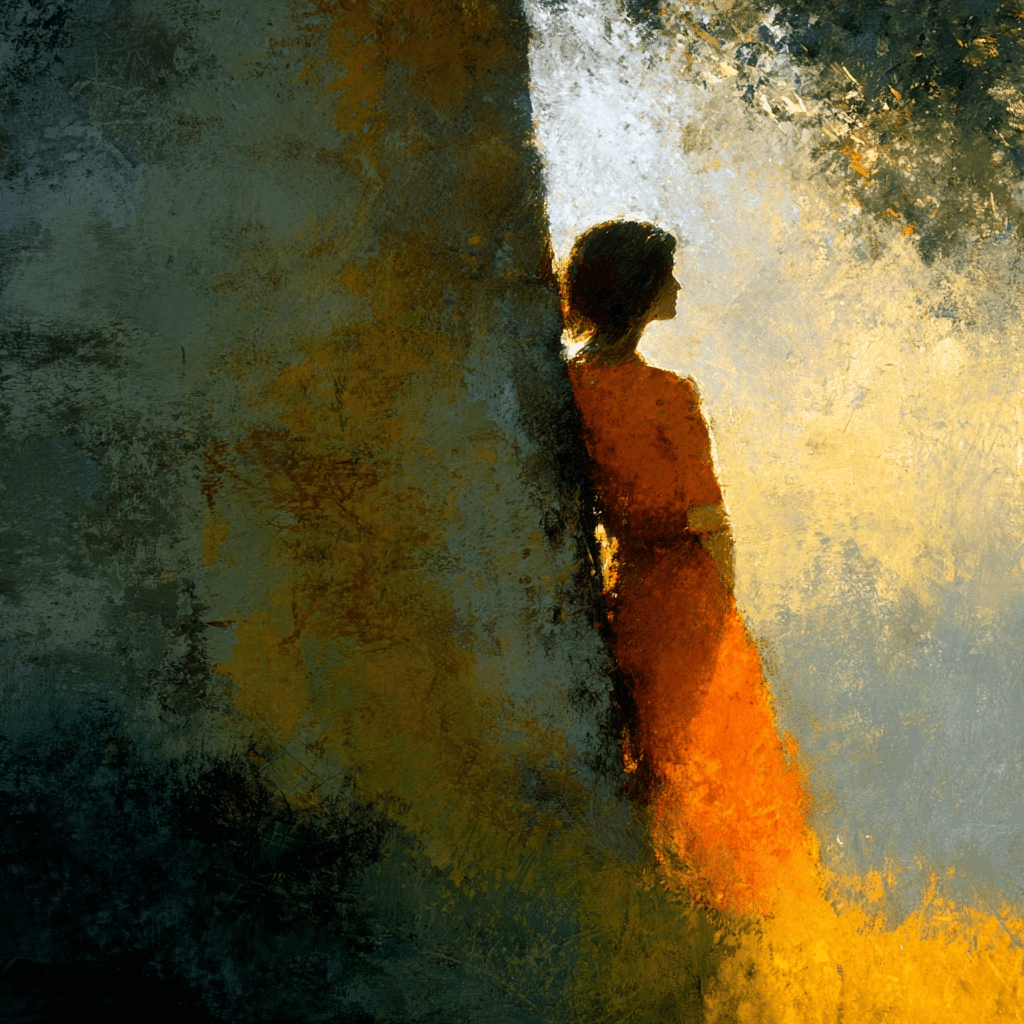
For me it is learning, creating and connecting with nature. These are the best medicine for me. When I cannot think or do anything, if I can lean against a tree things start to get better. My breathing slows, the fog clears, I feel love coming back into my veins.

What about you?

How will you enjoy the gift of the life you have right now?

Christmas grief

We all know that the holiday season can be a tough time if you are holding grief. Maybe it’s your first Christmas without someone you love. Or likely to be your last Christmas together because you, or they, have a diagnosis.

Can you hold that in your heart and breathe?

These moments of intense feeling are part of the gift of our mortality. Imagine yourself in the classic fairy-tale situation where you can wish for a cup of coffee that never runs out. Or a tin with an endless supply of your favourite chocolate brownies. That would seem great at first… but the lustre would wear off quite quickly. Knowing things are limited gives us a space to cherish them, value them, appreciate them.

Losing someone you love – or facing your own death – is huge compared to chocolate brownies of course. But some of that logic still applies. The “Live Positive” movement was born from the AIDS epidemic and has been shown to improve people’s lives. Shifting from victim mode to a more empowered stance opens up options for satisfying moments in life. However long we have left.

Just because commerce is trying to lure you into the Christmas trap of spending money and feeling stressed doesn’t mean you have to follow. If you never really enjoyed that family or religious tradition you grew up with, maybe now is your chance to change.

So what might a Positive Christmas look like for you? If you could have everything your own way, who would be there? What would you eat? Would you play games or listen to music or watch Love Actually or go on a sailing trip?

Maybe you want to give a small gift to your departed person that you know they would appreciate, or lay a place for them at the table. Honoring their absence is a way of honoring the presence they were in your life.

And if your grief is preemptive – knowing that you or someone else will die soon – then how can you make this Christmas extra special? What are the things that normally cost you time and energy that you just do out of habit or because it’s the normal thing to do? Maybe this situation is an impetus to create your own perfect Christmas that only has elements that you value and are moved by. If that means a cheese sandwich on a remote beach while listening to Harry Potter tapes then so be it. Make this Christmas the one you always longed for.

Wishing you peace and joy wherever you can find it

Preparing your soul for death

So you’ve got your will, your Lasting Power of Attorney and your Letter of Wishes / Advanced Plan sorted out. You have a clear idea about the practicalities of the end of your life, including maybe your death and funeral.

What about your soul? Your spirit? Your consciousness. Let’s say that part of you that leaves your body when you die. That distinct energy that makes you you. I’ll call it yuor soul for convenience, but let that mean whatever makes most sense to you.

Whether you believe in reincarnation, or that your molecules disperse back into the universe and find new opportunties, or heaven or hell or the great void, the fact is that your life, this precious story that is yours alone, will draw to a close. Wouldn’t it be satisfying to have that feel as clear and complete as possible?

Here are a few suggestions that might stimulate your own instincts to finding the best options for you.

Soul Retrieval Ceremony

Chances are you have lost some soul parts along the way. Maybe the shock of a car accident, or the heartbreak of the end of a relationship. Maybe overwhelming grief or a traumatic event. The loss of a country from war or ecological damage, or a person from death or a falling out, or a dream from finding it’s just not going to work out for you the way you had hoped.

The reasons may be from your current life or from your past lives. They could also be events that happened to your ancestors and have been passed down through the generations waiting to be resolved.

I follow a shamanic practice which allows me to identify and recover these soul fragments, returning them to your body for a greater sense of wholeness. ready for whatever awaits you upon death.

Removing unwanted energy

We also tend to pick up unwanted energy along the way. That might have been inflicted onto us by another person eg from trauma, love, conflict. In some cultures it could be termed a curse. The shamanic practitioner you are working with does a body scan looking for these issues and removing them, if you are ready to let them go. There’s a time and place for any healing, so there’s no need to feel bad about carrying unwanted energy from a long time ago, maybe you weren’t ready till now to let it go. Maybe you were still learning lessons from it. With your agreement, the unwanted energy – some say intrusion – can be removed. The result can be a relief of emotional or physical pain – or even some remission of symptoms. It can help you develop a new perspective that improves the quality of the remaining part of your life. And allows your soul to leave your body without these hindrances when the time comes.

Chakra balancing

I also perform a ceremony to assess and balance the chakra system of energy centres in the body. This can ease physical and emotional states for you as you continue your journey towards death, and creates a “clean slate” for you to carry into any next life or afterlife.

Psychopomp

This odd term refers to the process of escorting a spirit to the afterlife. Often in Western society we don’t do this and, particularly if a death was sudden or violent, that can cause confusion. Nobody wants to be a lost soul and I find this to be helpful not only for the person who is dying but also for the peace of mind of those left behind.

In some cases I have carried out psychopomp for those who have died decades or even centuries ago – on battlefields usually – and have not yet found free soul passage to their next stage. As well as helping those souls who choose to participate, it can also ease the energy of the space where they died.

Why wait?

Of course while all of these ceremonies are especially important on the approach to death, to smooth our transition and make the most of the experiences of this life, they are also valuable processes during our lives to help us progress and develop. Apart from the psychopomp ceremony, they can all be requested at any point when you feel ready for release or healing.

Contact me on freespiritdying@gmail.com if you are interested in any of these services. Allow for up to two hours. Hourly cost is US$100 / UK£75 / A$150 and the work can be done remotely – I don’t need to be in the same space as the person the ceremony is for.

Death Cafes

Death cafes are beautiful spaces hosted by volunteers all over the world.

They offer anyone who wants to join a safe space to talk about death, dying and grief. It is a place where death talk is not morbid, impolite or taboo – instead it is honest, real and life changing. More on the movement here

I’ve heard participants express their feelings for the first time about a parent’s death decades earlier and others share their fears about their own impending death. You might just be curious too, or feel that this important topic shouldn’t be hidden away from sight but brought into the open and considered.

I’ve run death cafes in UK, Bali and Sydney. Here are dates for the next ones. All times are local, all free entry. Let me know if you’re planning to come freespiritdying@gmail.com

Bali: Sep 25, 2-3.30pm @ Infiniti, Penestanan

London: Oct 11, 2-3.30pm @ The Sunflower Centre, 81 Tressillian Rd, SE4 1XZ

Sydney: Nov 22, 2-3.30pm @ tbc

Death Awareness Workshop

Let’s come together to Reclaim Dying and Enhance Living

Led by Catherine Shovlin: Author, Death doula, Funeral celebrant and Shamanic practitioner

Have you been affected by death? Maybe awareness of your own mortality, or caring for a dying friend or relative? Maybe you are dealing with grief and loss.

Modern society doesn’t always make it easy to deal with these issues – or even talk about them. Catherine believes that reclaiming death is a life enhancing process.

In this 2 hour workshop, Catherine will draw on her experiences to create a safe space for everyone to share their feelings and stories around death. She will share a guided meditation and other techniques that might change your perspective a little, creating some peace of mind around this important topic.

Join us at The Sunflower Centre, 81 Tressillian Road, Brockley, London SE4 1XZ,
on Tues Jul 29 or Sat Aug 9 from 2-4pm

Cost £20 (concessions available). tickets from Eventbrite

Sacred death registration

← Back

Thank you for your response. ✨